When homeowners begin planning a kitchen or bathroom remodel, the excitement typically starts with choosing the perfect countertop material. They compare quartz vs. granite, study different patterns, browse slab yards, and imagine how their dream kitchen will look. Yet while material selection matters, one crucial factor quietly determines whether the final result becomes a flawless showpiece or a disappointing installation:
Fabrication quality.
The fabrication process — how your countertops are measured, cut, shaped, polished, reinforced, and installed — has far more impact on the long-term beauty and durability of your stone than the slab itself. Two companies can start with the exact same quartz or granite, yet produce dramatically different results depending on their equipment, technique, skill, and attention to detail.
At Stonecrafters, fabrication is not a step in the process.
It is the process.
And it is where homeowners receive the greatest return on their investment.
This in-depth guide reveals why fabrication quality matters so profoundly, the risks of overlooking it, and what Stonecrafters does differently to deliver exceptional, long-lasting stonework.
What Stone Fabrication Really Is — And Why Most Homeowners Never See It
To the average homeowner, “fabrication” sounds simple — measure, cut, and install. But in reality, countertop fabrication is a highly technical, multi-step process combining engineering, artisan craftsmanship, digital technology, and structural accuracy.
Here’s what professional stone fabrication includes:
1. Precision Templating
The process begins with laser-guided digital measurements that capture:
- Exact cabinet dimensions
- Slight variations in walls
- Appliances, sinks, and cutout placements
- Overhang requirements
- Unique architectural features
Templating determines the entire fit and flow of your countertops. When this step is done poorly, nothing else can compensate for it.
2. Slab Layout & Design Planning
Before cutting even begins, a skilled fabricator lays out the entire kitchen digitally. This step determines:
- Seam placement
- Vein flow and directional patterns
- Bookmatching opportunities
- Waterfall edge alignment
- Cutout positioning
- How efficiently the slab is utilized
This is also the point where true artistry comes in — especially for natural stones with dramatic movement.
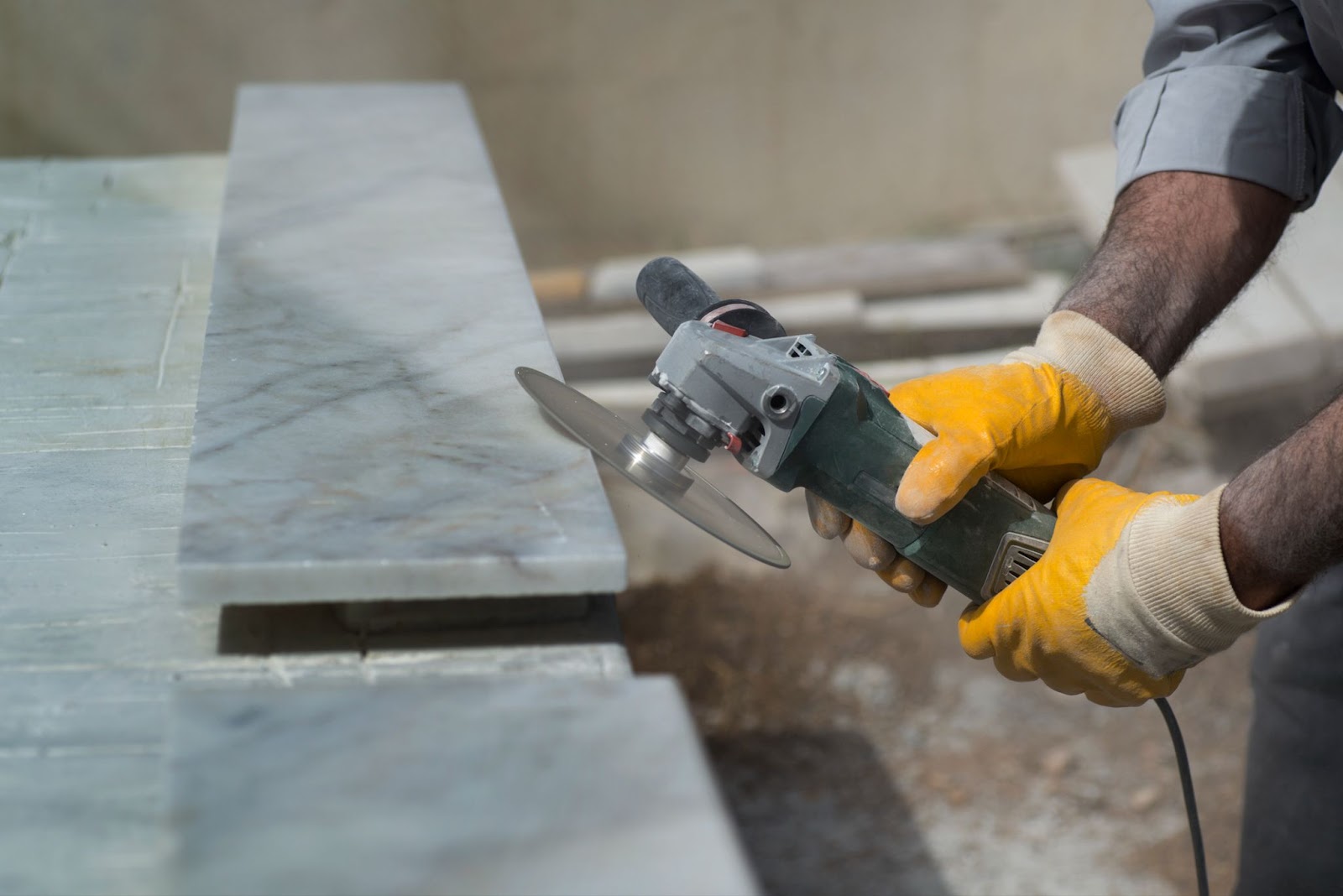
3. CNC + Waterjet Cutting
Next, the slab is cut using advanced machinery such as:
- CNC routers (for precision shaping and edges)
- Waterjet cutters (for curves, angles, and intricate cuts)
- Diamond-tipped bridge saws
The quality of this machinery — and the skill of the operator — directly affects accuracy, structural strength, and finish quality.
4. Edge Profiling
Edges are not just decorative. They influence:
- How the stone feels
- How it catches light
- Whether it fits your design style
- How resistant it is to chips or cracks
Premium fabricators can create a wide range of profiles, from simple eased edges to double-laminated bullnose or ornate ogee profiles. Each requires precise hand-finishing.
5. Polishing & Finish Work
Stone must be polished to a consistent finish across every surface and every edge. A high-quality polish:
- Enhances the stone’s beauty
- Protects the surface
- Improves durability
- Creates uniform shine or matte texture
Bad polish work is one of the easiest ways to spot a low-end fabricator.
6. Seam Blending
A good seam is nearly invisible. A bad seam is the first thing guests notice.
Seam quality is determined by:
- Stone alignment
- Vein continuity
- Adhesive color matching
- Surface leveling
- Polishing technique
Expert fabricators take seam placement so seriously they often redesign layouts to minimize seams altogether.
7. Professional Installation
Installation brings everything together. At this stage, the team must:
- Level cabinets perfectly
- Reinforce overhangs
- Secure sinks and cutouts
- Set seams accurately
- Ensure flush alignment
- Apply final polish and clean
- Protect the stone during placement
Even the best stone can fail if installed poorly.
The Unseen Reality: Stone Quality Means Nothing Without Fabrication Quality
Many homeowners believe that if they choose a high-end quartz or a premium natural stone, the outcome will naturally be beautiful. Unfortunately, that isn’t true.
The fabrication determines:
- How the slab looks
- How it fits
- How long it lasts
- Whether it cracks
- Whether seams are visible
- Whether edges chip
- Whether the stone is structurally sound
You can purchase the most stunning stone on the market — but if it is cut improperly, polished unevenly, or installed without care, the entire investment is compromised.
Fabrication is the difference between:
✨ A breathtaking, luxury finish
and
❌ A countertop that looks “off” from day one.
Common Fabrication Mistakes Homeowners Don’t Notice Until It’s Too Late
Low-end fabricators often cut corners to save time and reduce costs. Unfortunately, these shortcuts reveal themselves only after installation — sometimes months later, when repairs are expensive or impossible.
Here are the most common issues caused by poor fabrication:
1. Cracks Around Sink and Cooktop Cutouts
These are the most fragile areas of any countertop. Mistakes here include:
- Cutting too close to a vein
- Creating thin structural points
- Failing to reinforce heavy sinks
- Rushing cutouts without proper cooling
These cracks often appear months after installation, long after the contractor is gone.
2. Visible, Uneven, or Mismatched Seams
Bad seams happen when:
- Fabricators don’t align veins
- Slabs aren’t planed correctly
- Cheap adhesives are used
- Installers rush the job
A seam should blend naturally — not jump out at you.
3. Uneven Countertop Levels
If cabinets are not level and installers fail to correct it:
- Countertops can crack
- Seams can separate
- Appliances won’t sit flush
Stone cannot bend. It must be installed on a perfectly even surface.
4. Waves, Dull Spots, or Rough Edges
Poor polishing creates:
- Inconsistent reflection
- Rough edges that snag clothing
- Areas that lose shine over time
This is the #1 giveaway of a cheap fabricator.
5. Overhangs Without Proper Support
Stone without reinforcement can break under weight — sometimes catastrophically.
Islands, breakfast bars, and seating areas must be structurally engineered.
6. Incorrect Adhesives or Fillers
Low-grade adhesives can:
- Discolor over time
- Soften under heat
- Cause seams to weaken
- Bleed into porous natural stone
Quality materials matter just as much as quality craftsmanship.
Where Craftsmanship Truly Shows: Edges, Seams, and Vein Flow
Fabrication is where a fabricator proves their skill. Three areas reveal everything:
1. Edge Profiles
High-end fabrication produces edges that are:
- Smooth
- Strong
- Symmetrical
- Polished consistently
Cheap fabrication produces:
- Sharp edges
- Dull sections
- Wavy profiles
- Edges vulnerable to chips
Edges are touched daily — they should feel refined, not rough.
2. Seam Quality & Placement
Luxury-level seams:
- Have tight, even spacing
- Match the pattern of the stone
- Sit completely flush
- Use perfectly tinted resins
Poor seams are impossible to ignore — especially on light quartz or heavily veined stone.
3. Vein Matching & Bookmatching
Stone movement must flow naturally across pieces. Skilled fabricators:
- Align veins at seams
- Extend patterns down waterfall edges
- Mirror slabs for dramatic bookmatched walls
- Avoid awkward breaks or mismatched sections
This is the mark of true artistry.
Why Technology Matters: The Tools Behind the Stone
A modern fabricator must invest in advanced equipment to produce premium work. Stonecrafters uses:
- CNC machining for perfect cuts and edges
- Digital templating lasers for flawless measurement
- Waterjet technology for curved and complex cuts
- Industrial polishers for consistent finishing
These machines reduce human error and allow our craftsmen to achieve extraordinary precision.
What Stonecrafters Does Differently (Where Our Value Truly Shows)
Stonecrafters has built its reputation on craftsmanship, precision, and accountability. Here’s what sets our fabrication apart:
1. We Never Rush the Process
Premium stonework takes time. We refuse shortcuts.
2. We Use Advanced Digital Templating
This ensures accuracy down to the millimeter.
3. We Cut Stone Using State-of-the-Art CNC Machines
Every curve, angle, and edge is intentional and exact.
4. We Hand-Finish Every Surface
Machines are precise — but artistry requires human touch.
5. We Bookmatch and Vein-Match Thoughtfully
Every layout is carefully planned for visual harmony.
6. We Install With Full Reinforcement and Precision Leveling
Countertops must be structurally supported to last decades.
7. We Keep All Fabrication In-House
No outsourcing.
No subcontractors.
No inconsistency.
8. We Treat Stonework as a Craft — Not a Commodity
Every project represents our reputation and our values.
Why the “Cheapest Quote” Almost Always Costs More
Fabrication quality directly influences how often:
- Cracks appear
- Seams separate
- Sinks loosen
- Edges chip
- Finishes dull
- Countertops need repair
Fixing poor fabrication is costly — and sometimes impossible without replacing the entire surface.
Choosing a low-cost fabricator may save money upfront, but it creates far greater risk and expense later.
Choosing a premium fabricator protects your investment long-term.
How to Choose the Right Fabricator: A Homeowner’s Checklist
Before hiring any countertop company, ask these critical questions:
✔ Do you fabricate in-house?
✔ What equipment do you use?
✔ Can I see examples of your seam work?
✔ How do you handle vein matching?
✔ Do you reinforce overhangs and sinks?
✔ Are your installers trained employees or subcontractors?
✔ Can I visit your fabrication facility?
✔ What edge profiles do you offer?
✔ How long have you been fabricating stone?
A reputable fabricator will confidently answer every one of these questions — and welcome your curiosity.
Final Thoughts: Fabrication Is the Heart of Beautiful Stonework
Material selection is important.
Design planning is exciting.
But fabrication?
Fabrication is everything.
High-quality fabrication:
- Enhances beauty
- Extends lifespan
- Improves strength
- Increases home value
- Ensures long-term performance
- Elevates the entire room
Poor fabrication:
- Weakens stone
- Creates visible flaws
- Leads to costly repairs
- Reduces lifespan
- Diminishes the value of the material
When you invest in stone, you’re not paying for the slab —
You’re paying for the skill that brings that slab to life.
Transform Your Home with Premium Stonework — Choose Stonecrafters
At Stonecrafters, we believe every home deserves craftsmanship that lasts. Our fabrication team delivers:
- Precision engineering
- Superior materials
- Artistic design planning
- Advanced technology
- Expert installation
- Long-term durability
- Beautiful, seamless results
Whether you’re building your dream kitchen, upgrading a bathroom, or designing a custom home, Stonecrafters provides the quality, skill, and reliability your project deserves.
Ready to start? Schedule a consultation or request a quote today.