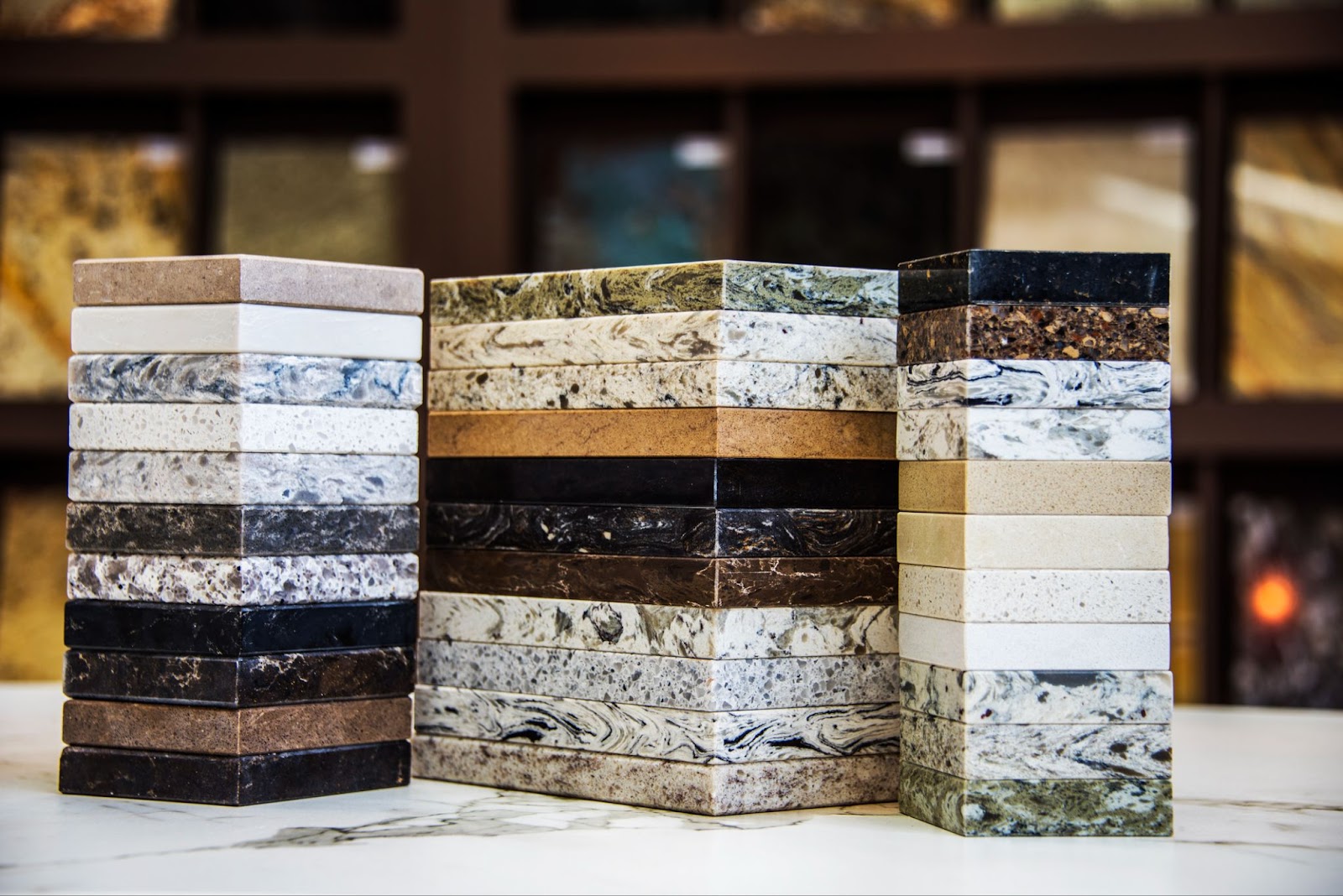
Choosing the right countertop material is one of the most meaningful decisions homeowners face during a remodel. Countertops aren’t just decorative surfaces — they’re high-use workspaces, long-term investments, and essential components of a kitchen or bathroom’s overall design. They influence everything from how your space feels to how well it functions for daily life.
In 2026, quartz and natural stone remain the two most in-demand countertop categories. But the debate between them has become more nuanced. Today’s homeowners are looking beyond aesthetics and cost; they’re thinking about sustainability, long-term durability, maintenance levels, resale value, installation considerations, and how each material performs with modern design trends like oversized islands, waterfall edges, and full-height backsplash applications.
This expanded guide takes an in-depth, expert-level look at quartz and natural stone so you can make a confident, informed decision about what’s best for your home. With decades of experience in fabrication and installation, Stonecrafters understands both the technical nuances and the everyday realities of countertop performance — and we’re bringing that insight directly to you.
Understanding the Materials in 2026
Before we compare performance, trends, and use cases, it’s important to fully understand what each material is, how it’s made, and why its characteristics matter.
What Exactly Is Quartz? (Engineered Stone)
Quartz countertops are a man-made, engineered surface composed of:
- 90–94% crushed quartz minerals
- 6–10% resins and polymer binders
- Pigments and additives for color + pattern
The manufacturing process allows quartz to mimic a wide range of aesthetics — from solid, minimal colors to intricate marble veining.
Key characteristics of quartz:
- Highly uniform appearance
- Non-porous
- Consistent coloring
- Extremely stain resistant
- Low maintenance
- Not fully heat resistant
- Not suitable for direct UV exposure
Quartz was originally popularized as a practical, easy-care alternative to natural stone. Today, it has evolved into one of the most design-flexible materials available.
What Is Natural Stone? (Granite, Marble, Quartzite & More)
Natural stone is quarried from the earth, cut into slabs, and polished — with no binders, additives, or artificial components.
Natural stone types commonly used for countertops include:
Granite
Hard, durable, heat resistant, and available in a wide range of colors and patterns.
Marble
Soft, elegant, naturally veined stone favored for luxury and high-end design.
Quartzite
Ultra-hard, durable, heat resistant stone with marble-like veining but granite-level strength.
Soapstone
Soft to the touch, dark, matte material with excellent heat resistance.
Dolomite
A marble-like stone that’s somewhat harder but still has moderate sensitivity to etching.
Travertine & Onyx
More niche, decorative options — typically used in bathrooms or accent walls, not high-traffic kitchens.
Key characteristics of natural stone:
- Unique, organic patterns
- 100% natural
- Highly heat resistant
- Requires sealing (depending on the stone)
- Ages gracefully over time
- Offers unmatched depth and visual movement
Because every slab is one-of-a-kind, natural stone appeals to homeowners seeking authenticity, luxury, and a connection to nature.
2026 DESIGN + MATERIAL TRENDS Impacting Homeowner Choices
Design trends shift every few years, but in 2026, several strong movements shape how homeowners view quartz vs. natural stone.
Trend #1 — Organic, Earth-Inspired Surfaces
Homeowners are gravitating toward:
- Earthy tones
- Soft neutrals
- Natural textures
- Stones with warm veining
This trend strongly favors natural stone (especially quartzite and marble), though newer quartz lines are doing a good job imitating subtle veining and movement.
Trend #2 — Matte & Honed Finishes
Honed stone and matte quartz are dominating high-end design.
Quartz manufactures matte finishes very well, while honed natural stone requires slightly more upkeep but delivers unmatched sophistication.
Trend #3 — Oversized Islands + Waterfall Edges
Because these installations require:
- Seamless veining
- Long, wide slabs
- Consistent coloration
Quartz offers easier pattern matching, but premium natural stone creates more dramatic, luxury-forward designs.
Trend #4 — Full-Height Stone Backsplashes
As backsplashes become statement pieces, stone movement matters.
- Quartz provides clean, consistent background tones.
- Natural stone delivers breathtaking, artistic veining.
The choice depends on whether the goal is calm minimalism or bold, organic beauty.
Trend #5 — Eco-Conscious Material Decisions
Many homeowners want natural, sustainable materials.
Natural stone’s appeal as a chemical-free, earth-derived, solid surface is growing — while quartz manufacturers are improving eco-friendly resins, recycled content, and cleaner production.
Visual Appearance: Predictability vs. Natural Expression
Appearance is often the first deciding factor in the quartz vs. natural stone debate.
Quartz Appearance: Clean, Uniform, and Controlled
Quartz excels in providing:
- Perfect consistency
- Controlled veining
- Minimalist styles
- Modern aesthetics
- Seam uniformity
It’s extremely designer-friendly for:
- Contemporary kitchens
- Scandinavian interiors
- Minimalist bathrooms
- Commercial spaces
If you want a clean, predictable surface, quartz is the strongest choice.
Natural Stone Appearance: Organic, Unrepeatable, Luxury-Forward
Natural stone offers visually rich elements that quartz simply can’t replicate:
- Depth within the stone
- Variations in color movement
- Multi-dimensional veining
- Subtle mineral deposits
- Natural sparkle or translucence
Stone feels like art, not product.
This matters especially for:
- Luxury remodels
- Entertainer kitchens
- Waterfall islands
- Statement backsplashes
- Homeowners who want uniqueness
No two slabs are ever the same — which for many buyers is a selling point, not a drawback.
Durability, Strength, and Real-World Performance
Let’s dive into performance — where many homeowners make their final decision.
Quartz Durability: Strong for Daily Wear, Weak to Heat + UV
Strengths:
✔ Scratch resistant
✔ Chip resistant
✔ Stain-proof
✔ Won’t absorb liquids
✔ Great for busy families
Weaknesses:
✘ Can scorch from hot pots
✘ Can discolor in direct sunlight
✘ Resin binders make it less heat resistant than natural stone
Quartz is extremely reliable indoors — but NOT suitable for outdoor kitchens.
Natural Stone Durability: Depends on the Stone, but Heat Performance Is Superior
Granite
✔ Very hard
✔ Heat resistant
✔ Scratch resistant
✔ Great for busy households
Quartzite
✔ Stronger than granite
✔ Excellent heat resistance
✔ Rarely scratches
Marble
✔ Durable but soft
✔ Prone to etching from acidic foods
✔ Beautiful in bathrooms + lower-traffic kitchens
Soapstone
✔ High heat resistance
✔ Soft surface (shows wear)
Dolomite
✔ Harder than marble
✘ Softer than granite
✘ Moderate heat and etch sensitivity
Natural Stone Durability Summary
If you regularly cook with hot pots, pans, cast iron, or baking sheets, natural stone is better suited. Especially granite or quartzite.
Maintenance: Quartz Is Easiest, Natural Stone Isn’t Hard
Maintenance is where quartz often wins — but natural stone has become easier to care for in recent years.
Quartz Maintenance
- No sealing
- Quick wipe-downs
- Highly sanitary
- Rarely stains
It’s virtually worry-free.
Natural Stone Maintenance (Modern Reality)
Sealing
Most natural stones need sealing once a year — a quick, inexpensive process.
Cleaning
Use pH-neutral cleaners. Avoid harsh acids on marble.
Etching
Marble owners should be aware of etching but can embrace patina as part of the stone’s character.
Misconception:
“Natural stone is hard to maintain.”
Truth: With proper sealing and mild cleaning, most natural stones are just as manageable.
Heat Resistance: Natural Stone Wins Every Time
Quartz’s resin content reduces its heat tolerance significantly.
Quartz Heat Limitations:
- Hot pans can burn, discolor, or crack the surface
- Heat pads are necessary
- Not suitable for outdoor use
Natural Stone Heat Advantages:
- Granite and quartzite easily handle high heat
- Marble and soapstone are naturally heat resistant
- Great for bakers, cooks, and entertainers
If heat is part of your lifestyle, natural stone is the clear winner.
Stain Resistance: Quartz Leads, Natural Stone Needs Sealing
Quartz is fully non-porous, meaning liquids cannot penetrate it.
Natural stone varies:
- Granite and quartzite resist staining extremely well when sealed
- Marble is more porous and should be wiped quickly
- Soapstone doesn’t stain but does scratch
If staining concerns you more than heat, quartz may be better suited.
Sustainability, Environmental Impact & Material Lifespan
Today’s homeowners want environmentally responsible choices.
Quartz Environmental Impact
- Energy-intensive manufacturing
- Uses resins (some petroleum-based)
- Often imported
- Some brands offer recycled-content options
Natural Stone Environmental Impact
- 100% natural resource
- No chemicals or resins
- Minimal processing
- Can last lifetimes
- Often recyclable
Natural stone’s sustainability advantage is growing in 2026 as more buyers move toward natural materials and organic design.
Cost Comparisons in 2026: What Homeowners Should Expect
Pricing fluctuates based on region, availability, slab thickness, fabrication difficulty, and rarity.
Quartz Pricing
- Entry: Affordable
- Mid-range: Moderate to high
- Premium: Comparable to high-end natural stone
Predictable pricing is one of quartz’s strengths.
Natural Stone Pricing
- Granite: Moderate-to-high
- Quartzite: High
- Marble: Moderate-to-premium
- Exotic stones: High-to-luxury premium
Some natural stones are less expensive than premium quartz. Others are significantly more.
Resale Value: What Buyers Want in 2026
Today’s homebuyers look for:
- Modern quartz in mid-range homes
- High-end natural stone in luxury homes
- Durable, classic surfaces that will last
Resale Trends:
- Quartz is seen as contemporary and low maintenance.
- Natural stone is seen as premium, luxury, and long-lasting.
Both materials add value — the best choice depends on the home’s price point and target buyer.
Real-World Use Cases: Which Surface Fits Your Lifestyle?
A material isn’t “better” — it’s better for certain homeowners.
Choose Quartz If You…
- Have kids or a busy household
- Don’t want to seal countertops
- Prefer uniform color
- Want a modern aesthetic
- Hate worrying about stains
- Prefer a lower-maintenance lifestyle
Choose Natural Stone If You…
- Cook often and use hot cookware
- Want a luxury, organic appearance
- Value authenticity and visual depth
- Are designing a statement kitchen
- Enjoy unique materials
- Want sustainability
Outdoor Kitchens: Only One Material Works
Quartz cannot withstand UV exposure — it will fade and yellow.
Outdoor-Friendly Natural Stones:
- Granite
- Quartzite
- Soapstone
If you’re planning outdoor living spaces, natural stone is the only viable option.
Expert Tips for Choosing the Right Countertop Material
From Stonecrafters’ decades of experience, here’s what matters most:
1. Assess your lifestyle first.
Not your Pinterest board.
2. Touch and view slabs in person.
Quartz samples and natural stone slabs look completely different in full scale.
3. Consider installation details.
Waterfalls, seams, and backsplashes may favor one material over another.
4. Think about your long-term habits.
Heat? Kids? Baking? High-traffic kitchen?
5. Choose a fabricator you trust.
Material is only half the equation — craftsmanship determines the final result.
How Stonecrafters Helps Simplify the Decision
Stonecrafters offers:
- Expert design guidance
- Full showroom slab viewing
- Material education that fits your lifestyle
- Transparent pros & cons for each option
- Digital rendering for visualizing your space
- Precision fabrication for flawless installation
We do this daily for homeowners who arrive overwhelmed — and leave confident and excited.
SECTION 15 — Final Comparison Table (Quick Summary)
| Feature | Quartz | Natural Stone |
| Appearance | Consistent, modern | Unique, luxury, organic |
| Heat Resistance | Low | High |
| Stain Resistance | Excellent | Good–Excellent (sealed) |
| Maintenance | Very low | Low–moderate |
| UV Resistance | Poor | Excellent |
| Outdoor Use | No | Yes |
| Sustainability | Moderate | High |
| Cost | Moderate–High | Moderate–Premium |
| Resale Value | Strong | High |
| Lifespan | 25–30 years | 50+ years |
Final Takeaway: Quartz vs. Natural Stone — Which Is Best in 2026?
The best material depends on your lifestyle, design goals, and long-term expectations.
Choose Quartz If You Want…
✔ A clean, modern, uniform look
✔ Extremely low maintenance
✔ Reliable stain resistance
✔ A practical everyday surface
Choose Natural Stone If You Want…
✔ Luxury, character, and natural movement
✔ Outstanding heat resistance
✔ A material that ages beautifully
✔ A one-of-a-kind kitchen
Ready to Transform Your Space? Stonecrafters Is Here to Help
Stonecrafters is trusted by homeowners, designers, and contractors for:
- Premium stone selection
- Beautiful quartz lines
- Advanced fabrication technology
- Expert installers
- White-glove service
Whether you’re updating a kitchen, bathroom, or whole home, your countertops deserve craftsmanship and care.
Reach out today to schedule a consultation, request a quote, or visit our showroom.